
9 Kings How to Play: Controls, Runs, and First Win
Learn the 9 Kings run loop: card types, plot placement, battles, merchants, decrees, and the year-33 final battle in one start-to-finish guide.
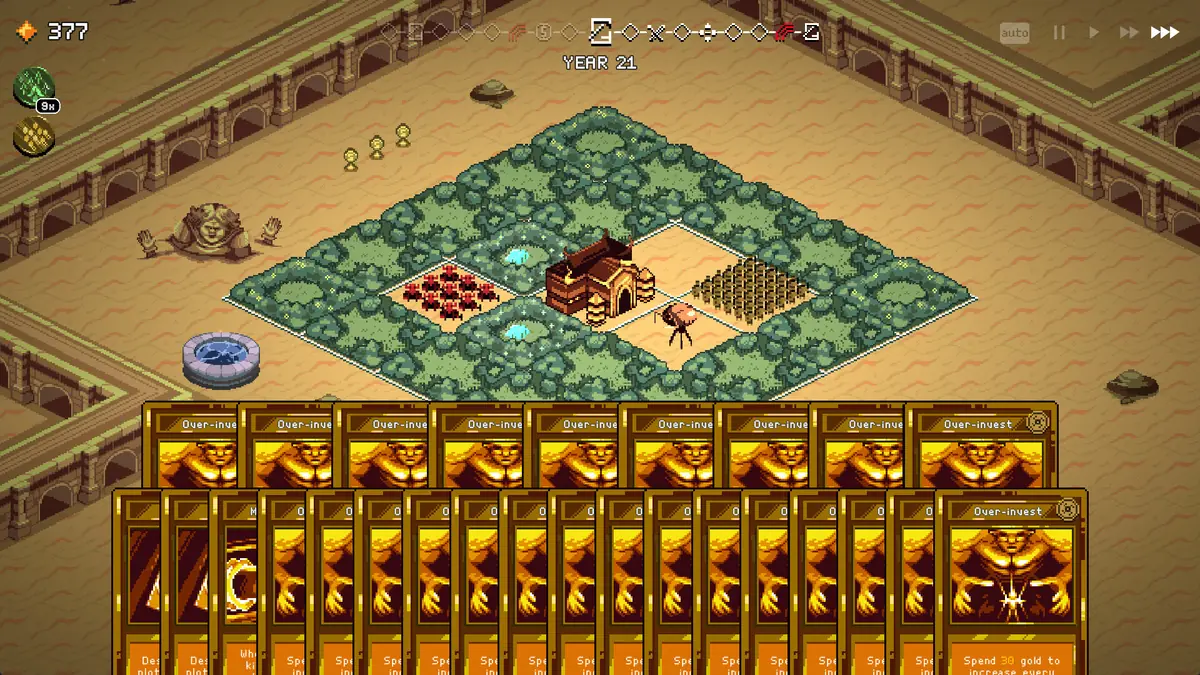
Quick answer: Place your base, spend gold on plots and cards, then fight one rival king each year. After every battle you pick one of three cards from the king you just faced. Survive to year 33, beat the final boss, and the run is won.
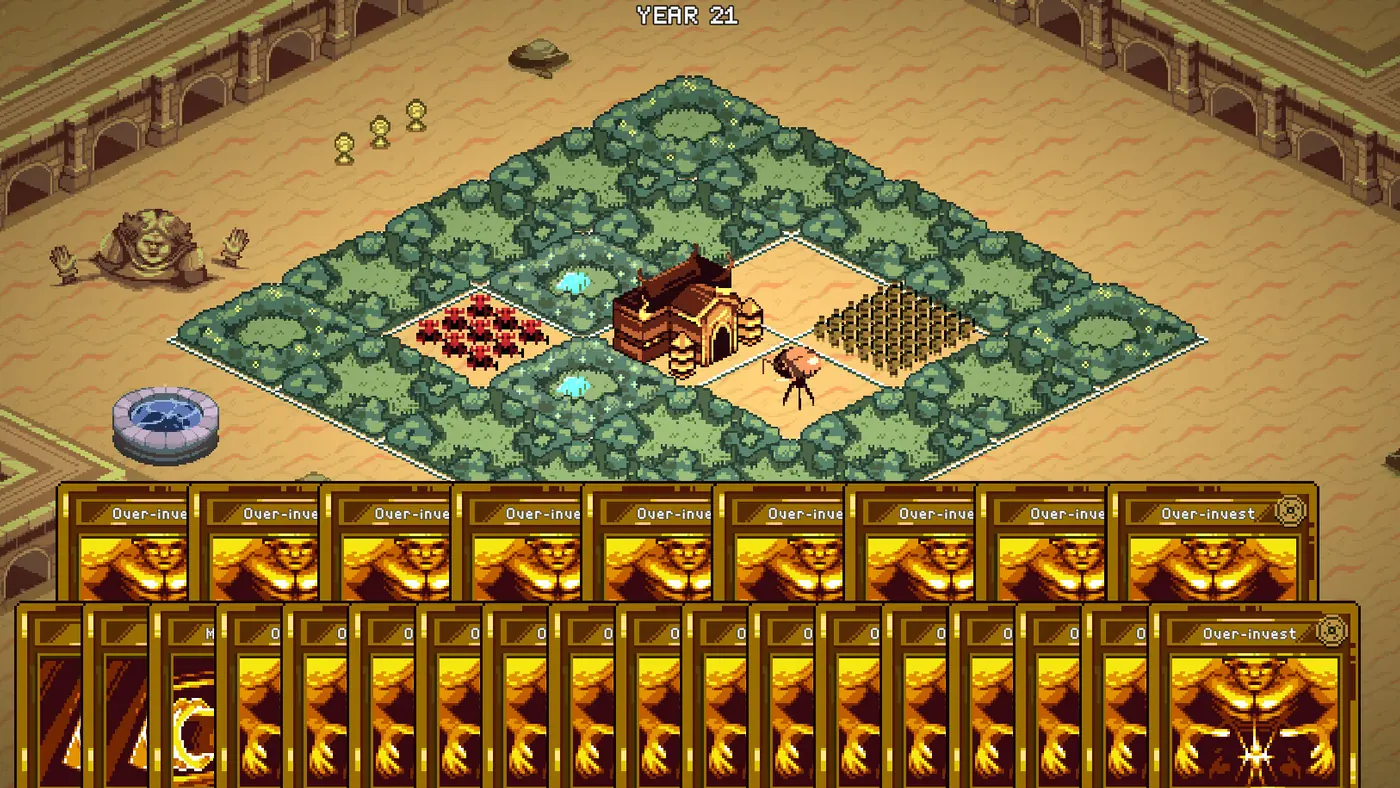
9 Kings looks like a city builder for about thirty seconds. Then the first army walks in, your farms start feeding a single Paladin, and the run turns into a drafting game with a grid attached. The launch build keeps that loop simple on purpose: one base, a small kingdom, one battle per year, and a final test at year 33. This page explains the whole loop without assuming you have played a roguelike deckbuilder before.
What is the actual goal in 9 Kings?
You are one of nine kings trying to build a kingdom that can survive the Final Battle at year 33. Each year has two phases: a build phase where you place cards and spend gold, and a battle phase where an enemy army attacks your base. Win the battle and you choose a new card. Lose the battle and you lose a life; lose all lives and the run ends.
The map is small. You do not expand across a continent. You unlock individual plots around your base, then decide what each plot does. That constraint is the game: a Farm that feeds one Paladin is worth more than three Farms spread across the grid, and a tower with no support is just a delay.
The six card types
Every king has nine cards, and every card falls into one of six types. The type tells you how the card behaves before you read a single number.
| Card type | What it does | Can it be enchanted? | Level cap |
|---|---|---|---|
| Troops | Mobile units that fight in battle | Yes | 3 |
| Buildings | Static plots that buff neighbours or generate resources | No | 3 |
| Enchantments | Consumable upgrades applied to a troop | They are the upgrade | Consumed |
| Tomes | Consumable cards with one-off effects | No | Consumed |
| Towers | Ranged plots that cannot be attacked or destroyed | No | 3 |
| Bases | Your starting plot, unique to each king | No | 3 by default |
Two rules matter more than the rest. First, towers cannot be destroyed, so a tower-heavy kingdom always gets value from its investment. Second, enchantments have no stack limit, which is why a single troop with three Steel Coats can tank a battle that would kill a normal army.
How a year works
A year starts with your kingdom intact and your gold total carried over. You place cards, upgrade plots, and buy from the merchant if it is present. Then you start the battle.
During battle, troops move toward enemies and fight automatically. You can pause, change speed, and issue limited orders, but you cannot redeploy plots. The battle ends when one base falls or the timer runs out. Winning gives you the choice of three cards from the enemy king's deck. Losing gives you a choice from your own deck and costs one life.
That reward rule is the main reason to fight wars you can win. Beating a king gives you access to that king's cards. If you want Library from the King of Spells, you need to beat the King of Spells, not simply meet him.
Gold, plots, and the first ten years
You gain 9 gold at the end of every year, win or lose. That is the floor. The merchant, vaults, and gold-generating cards push it higher.
Gold goes to three things: new plots, card purchases, and rerolls. A standard run starts with two free tower plots and unlocks more through the tower event, with additional plots costing 30 gold each after year 33. Early on, a new plot is usually better than a reroll. A plot is permanent; a reroll is one card you may not take.
The first Royal Council arrives at year 4. You choose one decree from a small set, and that decree shapes the rest of the run. Do not treat it as a minor bonus. A decree like Sharp Blades or Bunker can carry a composition that would otherwise stall.
The event calendar you need to know
9 Kings does not hide its schedule. The same events arrive at the same years in a standard run.
- Year 4: Royal Council. Pick one decree.
- Year 6: Prophet. Reveals the blessing that arrives at year 16.
- Year 8: Diplomat. War or peace changes which cards enter your pool.
- Year 12: First merchant. Sells cards for gold and offers rerolls.
- Year 16: The promised blessing.
- Year 33: Final Battle.
The merchant is not a one-time shop. It returns, and its stock changes. Buying a card at year 12 is often a mistake because 30 gold is two plots, but buying the right card at year 20 can complete a build that already has support.
Your first win: the simplest plan
The King of Nothing is the only king available on a fresh account, and that is fine. Its deck teaches the fundamentals better than any other.
- Place the Castle on the base plot.
- Put a Farm next to a single Paladin or Soldier, not next to three units.
- Add a Blacksmith to the same cluster once you have the card.
- Keep your melee troops on one side of the base and your towers on the other.
- Take Steel Coat whenever it appears; put every copy on your main troop.
- At year 4, take a defensive or economy decree unless you are already ahead.
- At year 33, keep your base alive long enough for the boss to walk into your stacked troop.
That plan does not require a rare card. It requires you to stop spreading buffs. A Farm that feeds one unit gives that unit +1 per year. A Farm that touches three units gives each of them +1, which sounds better until you remember that only one of them is your win condition.
What to do after the first win
Once you have a win, the game opens up. New kings unlock through quests, and each one changes the draft pool. The King of Greed turns gold into attack speed. The King of Nature turns healing into a wall. The King of Progress turns plot upgrades into a win condition.
Do not jump to the tier list and copy the top build immediately. Play one run with each unlocked king and read its nine cards. The cards are the tutorial. The tier list only tells you which ones convert most reliably at a high level.
If you want a tighter opening, read the opening strategy guide→ next. If your first runs keep dying around year 10, the beginner tips→ page covers the mistakes that cause it.
The build phase has no timer. Read every card's adjacency text before you commit a plot. Moving a plot later is usually impossible, and a misplaced Farm can cost more than a bad battle.
FAQ
How long is a 9 Kings run? A standard run reaches the Final Battle at year 33. A careful run takes roughly one to two hours; a fast run with a known build is closer to 45 minutes.
Can you lose a battle and still win? Yes. You lose one life, keep your kingdom, and pick a card from your own deck. You can recover from one or two losses, but repeated losses leave you behind on cards and plots.
Is 9 Kings multiplayer? Yes. It has asynchronous multiplayer against other players' kingdoms and online PvP, alongside the single-player Quest and Endless modes.
Do codes exist? No. 9 Kings has no redeem-code system in the launch build, so there is nothing to enter.
Sources
Official source: 9 Kings Steam store page ↗