
9 Kings Tier List: Every King Ranked for Patch 1.0
A 9 Kings tier list for the 1.0 launch build, ranking all nine kings by consistency, ceiling, and how easily each one reaches the year-33 final battle.
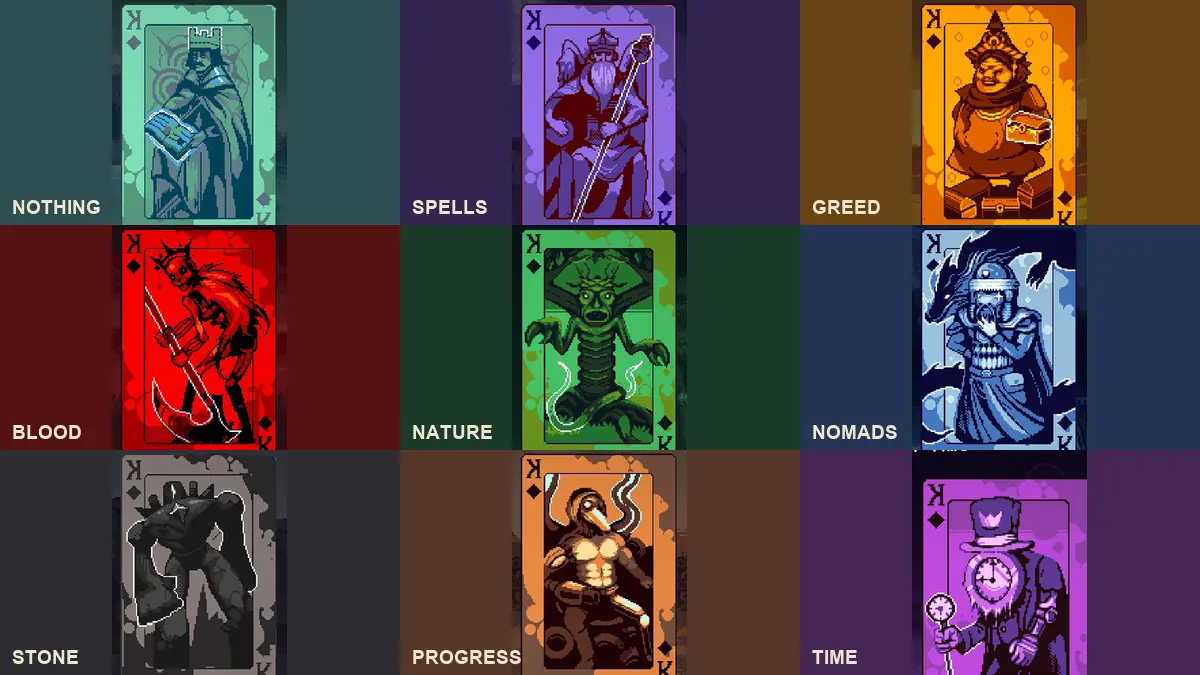
Quick answer: For the 1.0 launch, the King of Progress and King of Greed sit at the top, Nature and Nothing are the safest all-rounders, and Spells is the most draw-dependent. The ranking weights consistent wins, not highlight-reel peaks.
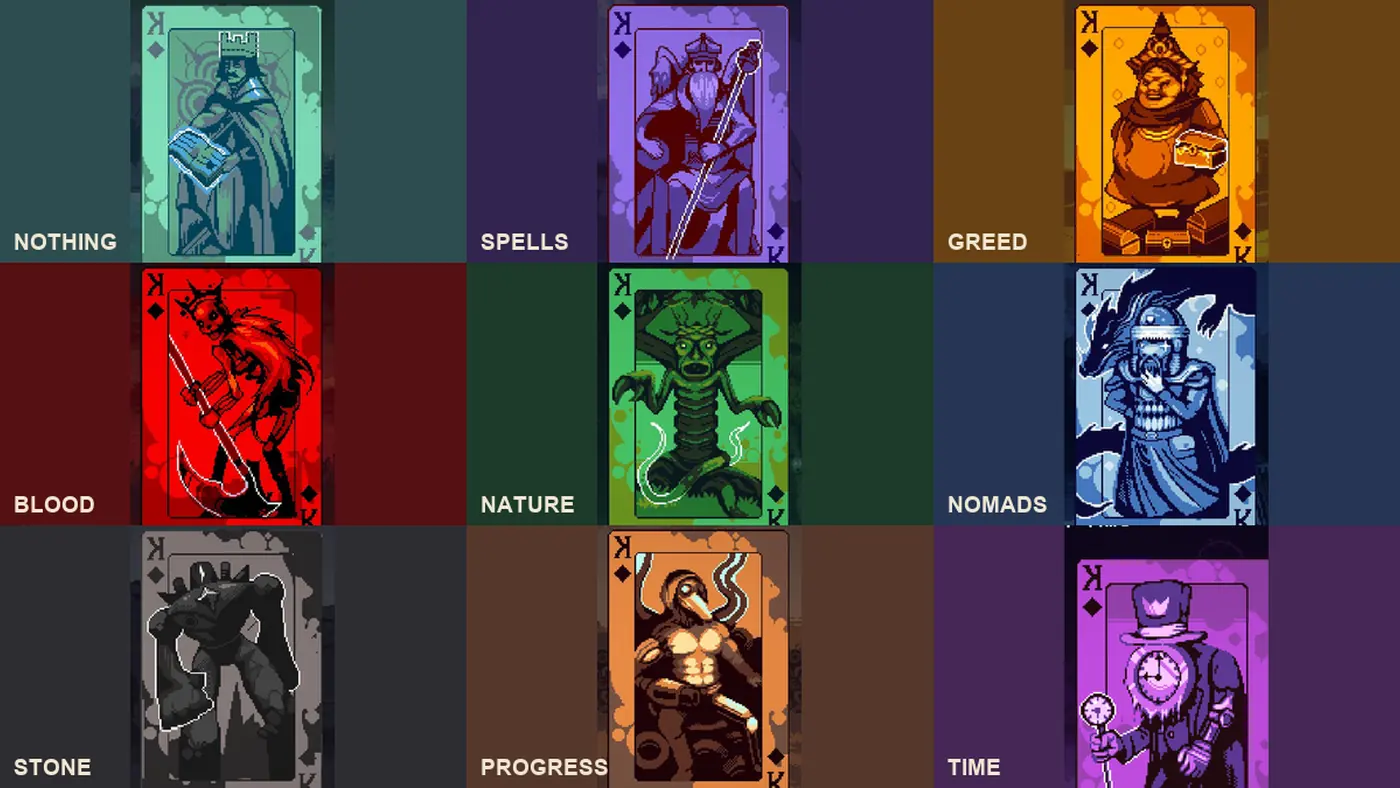
A tier list is only useful if it states its criteria. This one ranks the nine kings for a standard run that ends at the year-33 Final Battle. It rewards consistency, a clear engine, and the ability to function without a perfect draft. It does not reward the single best hand you could theoretically assemble.
The launch build is young. Several kings have cards whose numbers are still being tested, and the 1.0 balance pass changed enough that older tier lists should be treated as historical. This ranking reflects the November 12, 2026 build.
The ranking criteria
Three questions decide each placement.
- How often does the king's engine come online? A build that needs three specific cards is less consistent than one that needs two.
- How well does the king use generic support? Farms, Blacksmiths, Sharp Blades, and towers are available to everyone. Kings that multiply those tools rank higher.
- How does the king handle the Final Battle? A build that clears normal years but cannot kill one boss is not a top-tier run.
S tier
King of Progress
Progress has the highest ceiling in the game. Reinforce turns every plot upgrade into permanent damage. Concabulator upgrades the whole board at level 3. Lab Rat gains a level whenever an adjacent plot is upgraded, with no cap.
The reason Progress is S tier rather than a fragile combo is that its engine uses a resource you are already spending: gold on upgrades. You do not need a rare card to start. You need to upgrade plots next to the right unit. Defender also gives the build a safety net that most scaling decks lack.
The weakness is the opening. Progress wants gold and plots before it wants cards, and a bad first ten years can leave the engine too late. Once it is online, few builds can match it.
King of Greed
Greed converts gold into attack speed. Vault adds gold every year, Beacon adds attack speed to adjacent plots, and Dispenser gains attack speed for every gold earned. The three-card engine is compact and uses plots you would build anyway.
Greed is S tier because its resource is the one resource every run generates. You do not need to fight a specific king to start the engine; you need Vault, and Vault is in Greed's own deck. The build is slow, but it is almost impossible to starve.
The weakness is the early game. Greed's units are not impressive before the gold engine is running, and a fast enemy can punish the investment.
A tier
King of Nature
Nature is the best defensive scaling king. Forest adds HP to adjacent plots, Treant heals and damages, Mycelium spawns spores, and Boar converts HP into stats. The build is slow but extremely hard to kill.
Nature sits in A rather than S because its damage is conditional. The Boar needs to connect, and the Treant needs time. Against a fast boss, the build can run out of clock. Against anything that fights in a line, it is excellent.
King of Nothing
Nothing is the best teaching king and a genuinely strong pick. Farm and Blacksmith are clean multipliers, Paladin and Soldier have good base stats, and Steel Coat is one of the best enchantments in the game.
Nothing is A tier because it has no unique engine. It does what every king does, but with better fundamentals. That is a compliment: a Nothing run with good placement beats a greedy Spells run with bad placement.
King of Blood
Blood has the widest summon package and the most explosive snowball. Pagoda, Cemetery, Demon's Altar, and Mangler all convert deaths into value. A good Blood run can overwhelm the board by year 20.
Blood is A tier because it is harder to pilot. Sacrificing the wrong unit loses the battle, and the build needs a wide board to function. It is strong, but it demands more decisions than Nature or Nothing.
King of Time
Time is the newest king and the hardest to rank. Portal returns you to a past year while keeping kingdom progress, Amplifier copies every buff it receives to adjacent plots, and Hourglass rewards long battles. The ceiling is high.
Time is A tier on potential, not on consistency. The setup is complicated, the card text is less intuitive than the other kings, and a mistake with Portal can undo a good year. Players who learn it will rank it higher than this list does.
B tier
King of Stone
Stone is the pure tower king. Stronghold summons towers, Trebuchet adds a rock per building, Quarry buffs every tower and base, and Ballista pierces. The build is safe and straightforward.
Stone is B tier because towers cannot be destroyed, but they also cannot chase. A tower build can run out of time against a mobile boss or a fast push. It is a good choice for a patient player and a poor choice for someone who wants to finish battles quickly.
King of Nomads
Nomads has a fun movement engine: Warlord buffs nearby units, Camp rewards placing cards on empty plots, Migration repositions units for +10% attack and HP, and Swords and Shields scale well. The problem is that the build asks you to keep moving while the enemy is closing in.
Nomads is B tier because its payoff is positional. A perfect sequence is strong; a normal sequence is average. It is not a bad king, but it is less forgiving than the A-tier picks.
C tier
King of Spells
Spells has the highest single-target burst in the game through Static chains, and Library is one of the best support cards. The problem is that the build needs several pieces: a fast attacker, Static, a front line, and preferably Spire.
Spells is C tier for consistency, not for power. A run that finds its pieces can beat any other build. A run that does not will spend the middle years with a fragile board and no reliable damage. If you enjoy drafting, this is the most interesting king; if you want a clean climb, start elsewhere.
How the tiers shift with player skill
Tier lists assume a competent pilot. At low experience, Nothing and Stone overperform because their plans are simple. At high experience, Spells and Time move up because their ceilings are higher and their weaknesses can be played around.
That is why the best first pick is not the S-tier king. The best first pick is the king whose cards teach you the game. Nothing does that better than anyone.
The one-sentence version
Play Progress or Greed if you want the strongest engines, Nature or Nothing if you want safety, Blood or Time if you want a high-ceiling project, Stone or Nomads if you want a specific plan, and Spells if you want to draft your way to a highlight.
The best builds→ page turns each tier into a concrete composition, and the unlock kings→ guide explains how to get each one.
A B-tier king with the right decree can beat an S-tier king with a bad draft. Use the tiers to choose a project, not to predict a single run.
FAQ
Who is the best king in 9 Kings? The King of Progress has the highest ceiling, and the King of Greed is the most consistent gold engine. Both are S tier in the 1.0 build.
Who is the worst king? The King of Spells is the most draw-dependent, so it has the lowest consistency ranking. It is not weak when its pieces come together.
Should I unlock all kings before picking a main? No. Play Nothing until you understand the loop, then unlock the king whose cards fit your preferred plan.
Does the tier list apply to multiplayer? Partly. Multiplayer rewards faster, more interactive builds, which moves Greed and Blood up and Stone down.
Sources
Official source: 9 Kings Steam store page ↗