
King of Time Build Guide: Portal Amplifier Control
A King of Time build for 9 Kings 1.0: Portal, Amplifier, Hourglass, and the time-manipulation cards that make the newest king the most complex in the game.
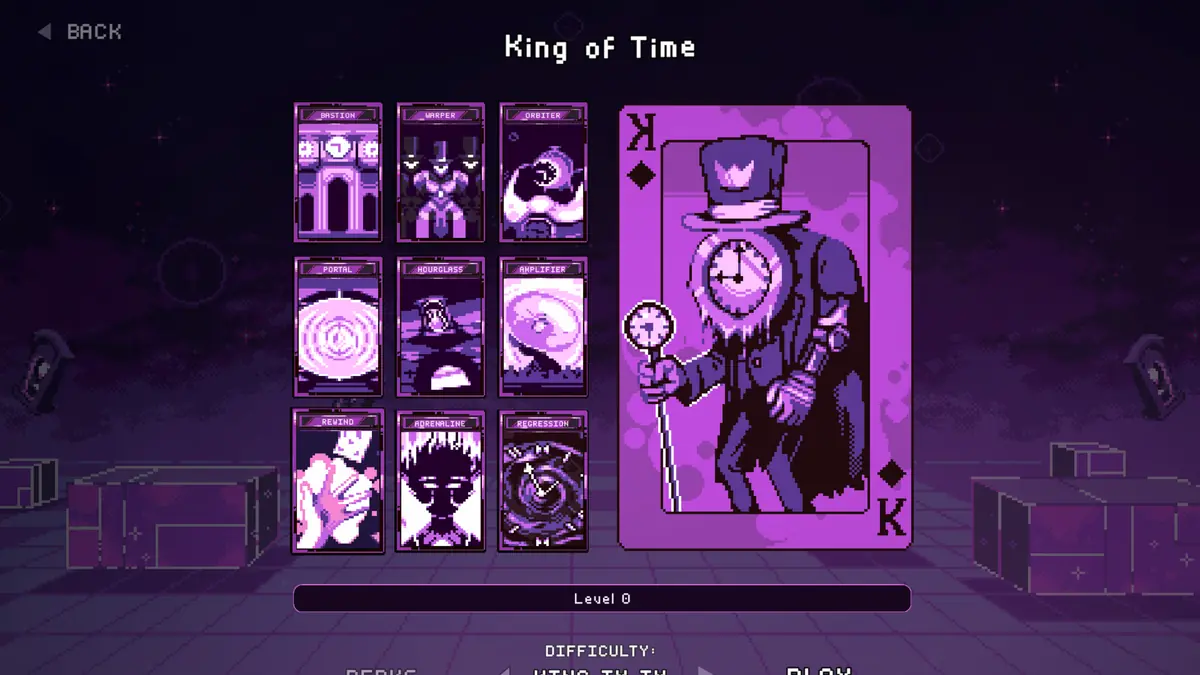
Quick answer: The King of Time build uses Portal to rewind bad fights, Amplifier to copy buffs across the board, and Hourglass to reward long battles. It is the most complex deck in 9 Kings and the least forgiving of bad positioning.
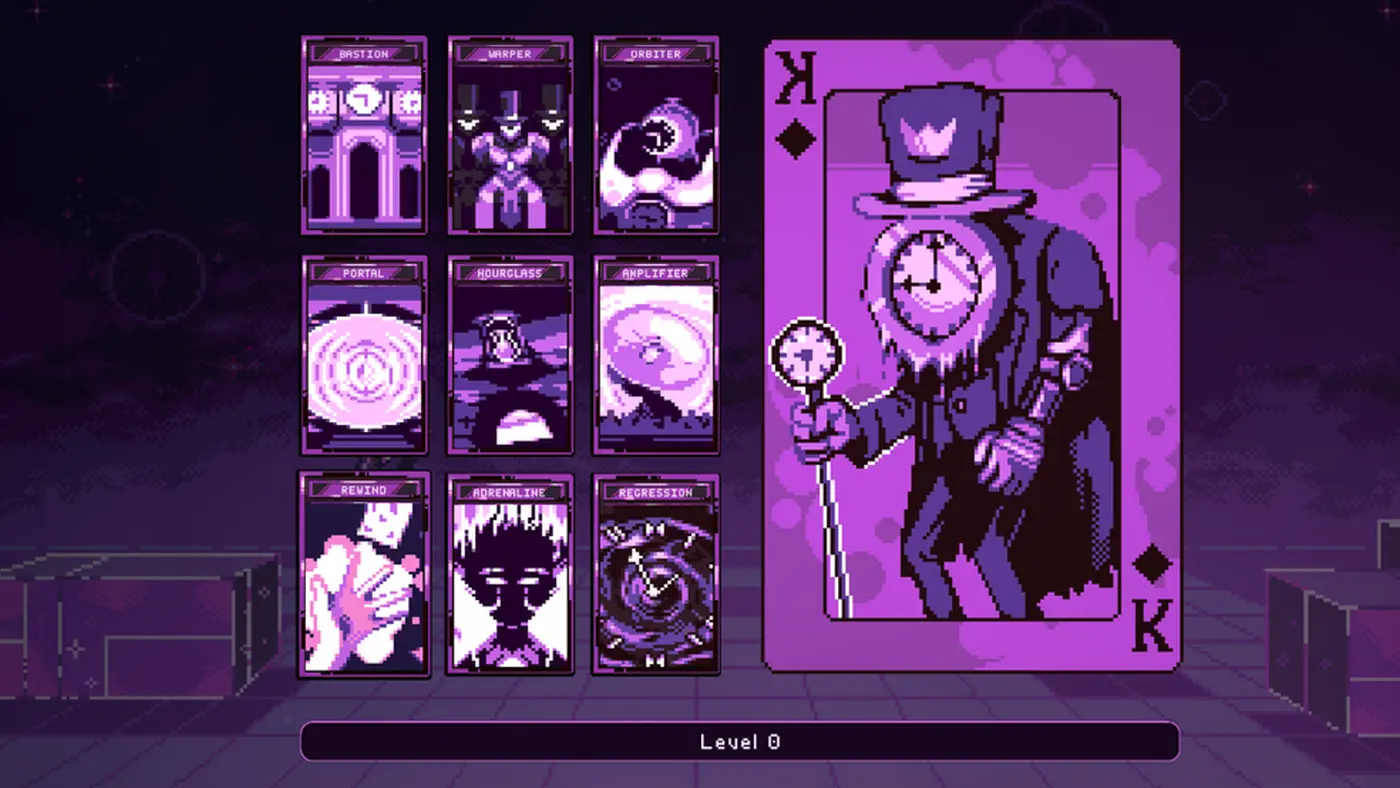
Time is the newest king, added in patch 15, and it plays unlike any other deck. Its cards manipulate the run itself: rewinding years, returning enemies to the start, copying buffs, and rewarding fights that last longer.
That makes it powerful and hard to evaluate. A Time player is not just building a board; they are editing the timeline of the run.
The deck
Time's ten cards:
- Bastion (base): returns enemies to the start of the battlefield.
- Orbiter (troop): strong adjacency gains.
- Warper (troop): summons units during battle.
- Portal (building): returns to a past year while keeping kingdom progress.
- Hourglass (tower): rewards long battles.
- Amplifier (building): copies each buff it receives to adjacent plots.
- Rewind (tome): returns a played card to your hand.
- Regression (building): another time-bending effect.
- Adrenaline (enchantment): attacks faster the longer the battle lasts.
- Temp Null (tome): a time-based utility card.
Time has ten cards instead of nine, which is one of the reasons it feels different from the other kings.
The Portal Amplifier engine
The core loop:
- Amplifier copies buffs to adjacent plots.
- Orbiter receives those buffs and converts them into stats.
- Portal rewinds a bad year without losing kingdom progress.
- Hourglass rewards the long fights that Portal and Adrenaline create.
The engine is less about a single carry and more about a board that gets better over time. Amplifier is the multiplier; Orbiter is the payoff; Portal is the safety net.
Opening priorities
Years 1–3: take Orbiter or Amplifier. If neither appears, take Warper for bodies.
Year 4: take Sharp Blades or Exploration. Sharp Blades helps the Orbiter; Exploration gives Amplifier more targets.
Years 5–7: place Amplifier next to the Orbiter. Place Bastion on the base plot.
Years 8–11: save gold. Time wants Portal or Hourglass at year 12.
Year 12: buy Portal if it appears. If not, buy Hourglass or a second Amplifier.
The full board
By year 20:
- Base plot: Bastion.
- Carry plot: Orbiter with Amplifier adjacent.
- Support plots: Amplifier and Hourglass.
- Front line: Warper and summoned bodies.
- Kill zone: Bastion's push-back plus Hourglass.
- Open plot: a second Amplifier or a defensive card.
Keep the Amplifier next to the Orbiter. The Orbiter's adjacency gains are the point of the build.
Decrees
The best decrees for Time:
- Sharp Blades: +30% attack. The Orbiter's damage scales with it.
- Exploration: extra plots. Amplifier needs targets.
- Feast: double max HP. Keeps the Orbiter alive.
- Overwork: support buildings trigger one more time. Excellent with Amplifier.
Avoid Bunker unless you are playing a tower variant with Hourglass.
Perks
The Time perks that matter:
- Physicist: +10% time effect.
- Destructive: +10% damage.
- Wise: +1 reroll.
- Manipulative: +10% Portal value.
- Agile: +10% attack speed.
Universal: Ingenious, Expansionist, Persistent, Nurturer, and Swift. Swift is strong because the Orbiter wants attack speed.
When Portal arrives late
Portal is the safety net, not the engine. If the merchant does not offer it by year 12, do not stall the run waiting for it. Buy Hourglass or a second Amplifier and treat Portal as a bonus.
Without Portal, your year plan changes. You cannot replay a bad fight, so take the safe option at every council and keep one life in reserve. Bastion's push-back becomes more important because it buys the extra seconds Hourglass needs.
Amplifier has a second use that is easy to miss: it copies buffs it receives from any source, including decrees and support buildings. Place it between the Orbiter and a support plot, not behind the Orbiter. The Orbiter should touch the Amplifier; the support should touch both.
If you are flooded with tomes, use Rewind on a card you played too early rather than holding it for a perfect turn. Time wins by correcting small mistakes, not by saving one huge play.
The Final Battle
Time's Final Battle plan is to outlast the boss. Bastion pushes the boss back, Hourglass rewards the long fight, and Amplifier keeps the Orbiter scaling. Portal can undo a bad year, but it cannot undo a lost Final Battle.
The weakness is complexity. Time has more moving parts than any other deck, and a mistake in positioning can waste a whole run.
Common mistakes
Putting Amplifier away from the carry. It copies buffs to adjacent plots. If the carry is not adjacent, the amplifier does nothing.
Using Portal too late. Portal is a safety net, not a win condition. Rewind a bad year before it becomes a lost run.
Ignoring Bastion. The push-back is the deck's main defensive tool. Keep it on the base plot.
Playing Time before you know the game. Time is the last unlock for a reason. Learn the core loop first.
The unlock kings→ page explains how to get Time, and the best builds→ page compares it with the other engines.
Play at least one full run with Nothing, Greed, and Progress before you attempt Time.
FAQ
Is King of Time good in 9 Kings? It has a high ceiling and a steep learning curve. It is strong in the hands of an experienced player.
What is the best Time build? Portal Amplifier: Orbiter, Amplifier, Bastion, Hourglass.
How do I unlock King of Time? Play more than 999 total years across your runs.
Does Time have ten cards? Yes. It is the only king with ten cards in its deck.
Sources
Official source: 9 Kings Steam store page ↗